
Growing Calathea, the plant that prays
A beginner's guide to keeping prayer plants thriving on desks, shelves, and windowsills — indoors and in the office.
What Calathea lack in flowers, they amply compensate for in exquisite foliage patterns. You can't look at a Calathea plant once — the eye always demands a second helping.
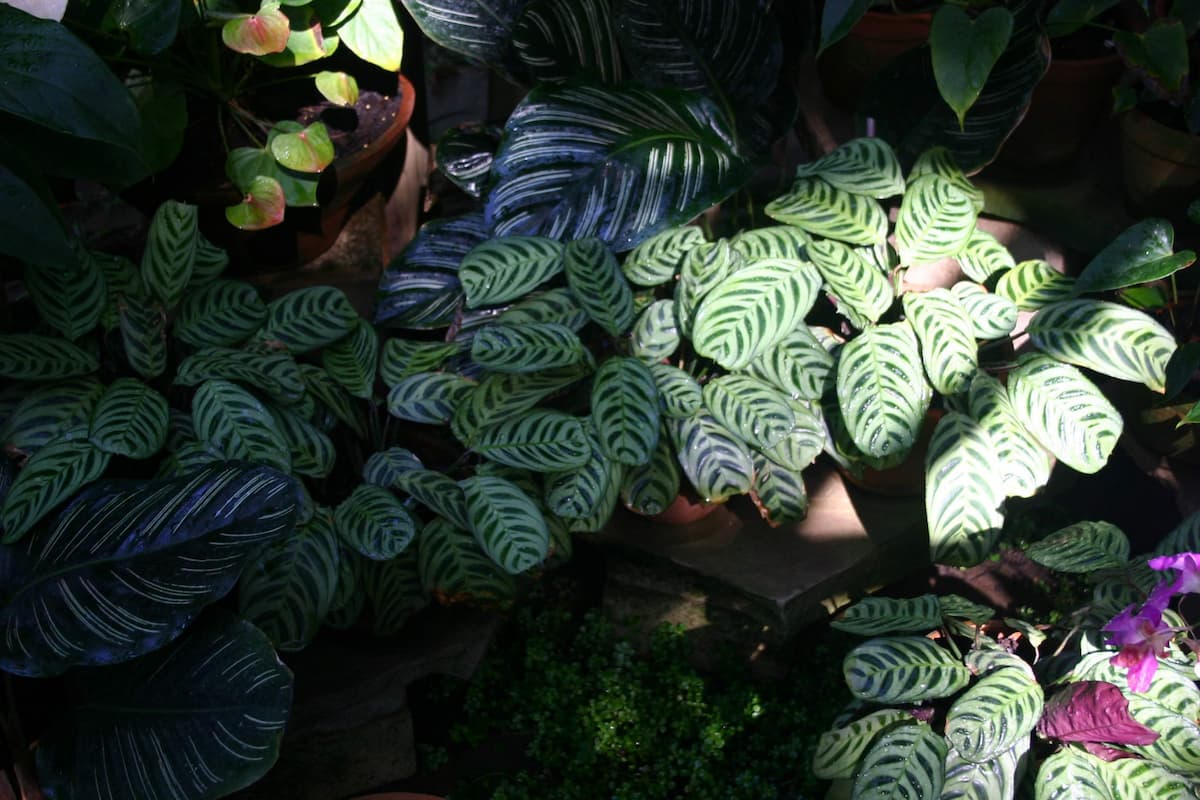
Calathea plants are still often called by their common name even though many species have been reclassified as Goeppertia. They are among the most beautiful houseplants you can grow. Their striking patterned leaves look hand-painted, and many fold up at night like praying hands — hence the nickname "prayer plants."
If you're a beginner looking to add lush greenery to your home, apartment, or office desk, Calatheas are incredibly rewarding. The trick is to understand their needs. They thrive in the same conditions as many tropical rainforest floor plants: bright but indirect light, consistent moisture, and higher humidity. This guide walks you through everything step by step so you can grow healthy, vibrant Calatheas indoors and in office environments — covering popular varieties, full care instructions, common problems, propagation, and a helpful FAQ.
What Makes Calathea Plants Great for Beginners and Offices?
Calatheas bring instant tropical vibes with minimal flowers — the foliage is the star. They are:
- Generally non-toxic to pets and children (safe for shared office spaces)
- Excellent air purifiers
- Relatively compact for desks, shelves, or tabletops
- Forgiving once you get the basics right
The main challenge for beginners is their love of consistent moisture and humidity. Offices with air conditioning and dry indoor air can be tricky, but simple solutions like pebble trays or small humidifiers make them very doable.
Popular Calathea Varieties for Beginners
Here are some of the most popular and beginner-accessible varieties, ranked roughly from easiest to slightly more demanding based on real-world indoor growing experience.
| Variety | Common Name | Difficulty | Best For | Key Features | Notes |
|---|---|---|---|---|---|
| Goeppertia insignis | Rattlesnake Plant | Easy | Beginners, offices | Lance-shaped leaves with dark green spots | Very forgiving, great starter choice |
| Goeppertia makoyana | Peacock Plant | Easy–Medium | Bright indirect spots | Translucent "windows" on leaves | Loves consistent care |
| Goeppertia orbifolia | Round-leaf Calathea | Medium | Statement pieces | Large round silver-green leaves | Needs higher humidity |
| Goeppertia roseopicta 'Dottie' | Rose-Painted Calathea | Medium | Color lovers | Deep green with hot pink markings | Striking but slightly fussier |
| Stromanthe sanguinea 'Triostar' | Triostar | Medium | Color contrast | Green, pink & cream variegation | Related but slightly different needs |
| Goeppertia kegeljanii 'Network' | Network Calathea | Medium | Modern offices | Dark veins creating network pattern | Popular and relatively hardy |
Beginner recommendation: Start with the Rattlesnake Plant. It tolerates average indoor conditions better than some others and shows problems clearly so you can learn fast.
Calathea Plant Care Guide: Everything Beginners Need to Know
How Much Light Does a Calathea Need?
Calatheas naturally grow on the rainforest floor under a canopy of trees. They love bright, indirect light but hate direct sun. Best placement indoors and in offices:
- 2–6 feet from an east- or north-facing window
- Behind sheer curtains or frosted glass
- Office desks near windows but not in direct sunlight
- Avoid south- or west-facing windows without protection
Signs of too much light: Fading patterns, crispy brown edges, or scorched spots.
Signs of too little light: Slow growth, leggy stems, or dull colors.
Office tip: Many offices have fluorescent or LED lighting that works surprisingly well for Calatheas. If your desk is far from windows, a small grow light on a timer (12–14 hours) helps a lot.
How Often Should You Water a Calathea?
This is the #1 question beginners ask — and the most important skill to master.
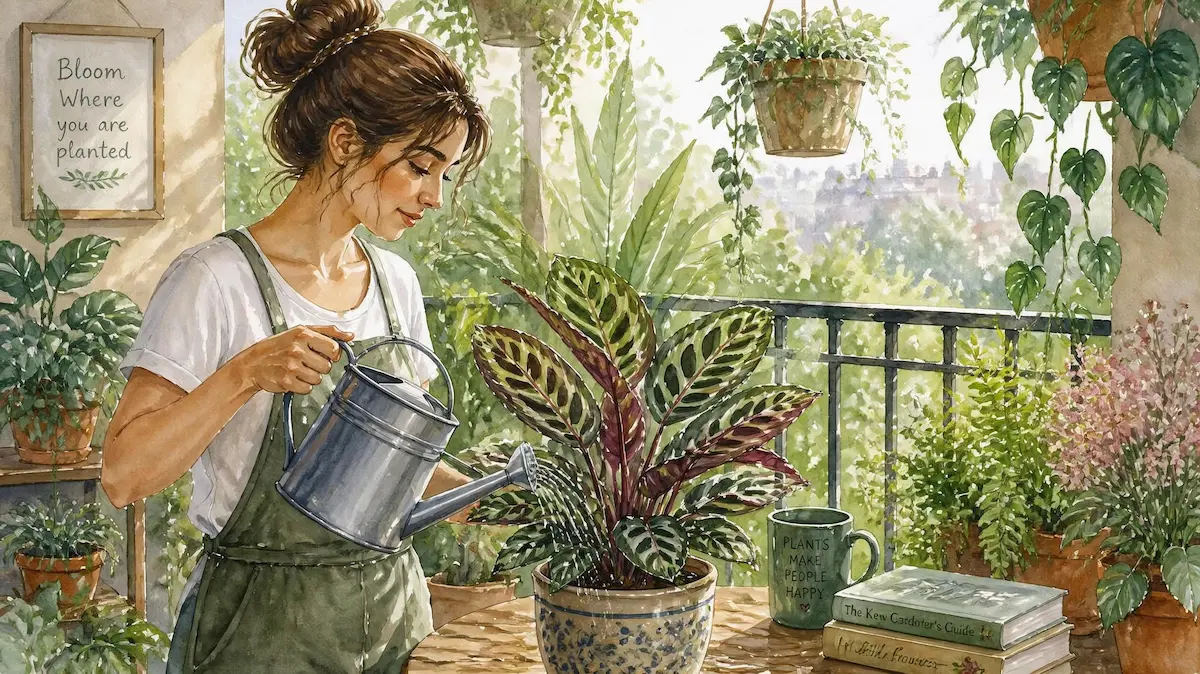
Rule of thumb: Keep the soil evenly moist but never soggy or bone-dry. Water when the top 1–2 inches of soil feel dry to the touch. Best practices for beginners:
- Use filtered, distilled, or rainwater whenever possible (tap water minerals can cause brown tips)
- Water thoroughly until it drains out the bottom, then empty the saucer
- In offices with dry air or AC, you may need to water slightly more often
- Reduce watering in winter when growth slows
Signs you're watering correctly: leaves stay upright and patterns remain vibrant.
Humidity Requirements for Calathea Plants
High humidity (50–60%+ ideal, 70%+ for fussier varieties) is non-negotiable for happy Calatheas. Easy ways to increase humidity indoors and in offices:
- Use a small room humidifier (highly recommended for offices)
- Place the pot on a tray of pebbles and water (water shouldn't touch the pot bottom)
- Group several plants together
- Mist leaves occasionally (helpful but not a complete solution)
- Keep in naturally humid rooms like bathrooms or kitchens when possible
Office hack: Many people keep a small USB humidifier on their desk — it makes a huge difference.
Temperature and Placement
Calatheas prefer 65–80°F (18–27°C) during the day. They dislike cold drafts, heating vents, and sudden temperature swings. Best office and indoor spots:
- Away from AC vents and heaters
- Not on windowsills that get cold at night
- Stable temperature areas (most living rooms and offices are perfect)
Soil and Potting Mix
Use a well-draining but moisture-retentive mix. A good beginner recipe:
- 2 parts high-quality peat-free potting mix or coco coir
- 1 part perlite or orchid bark
- Optional: a handful of worm castings for gentle nutrients
Always use pots with drainage holes.
Fertilizing Calathea Plants
Feed lightly during the growing season (spring through early fall). Use a balanced liquid houseplant fertilizer diluted to half strength once a month. Skip fertilizing in winter.
Pruning and General Maintenance
- Remove any yellow or brown leaves with clean scissors
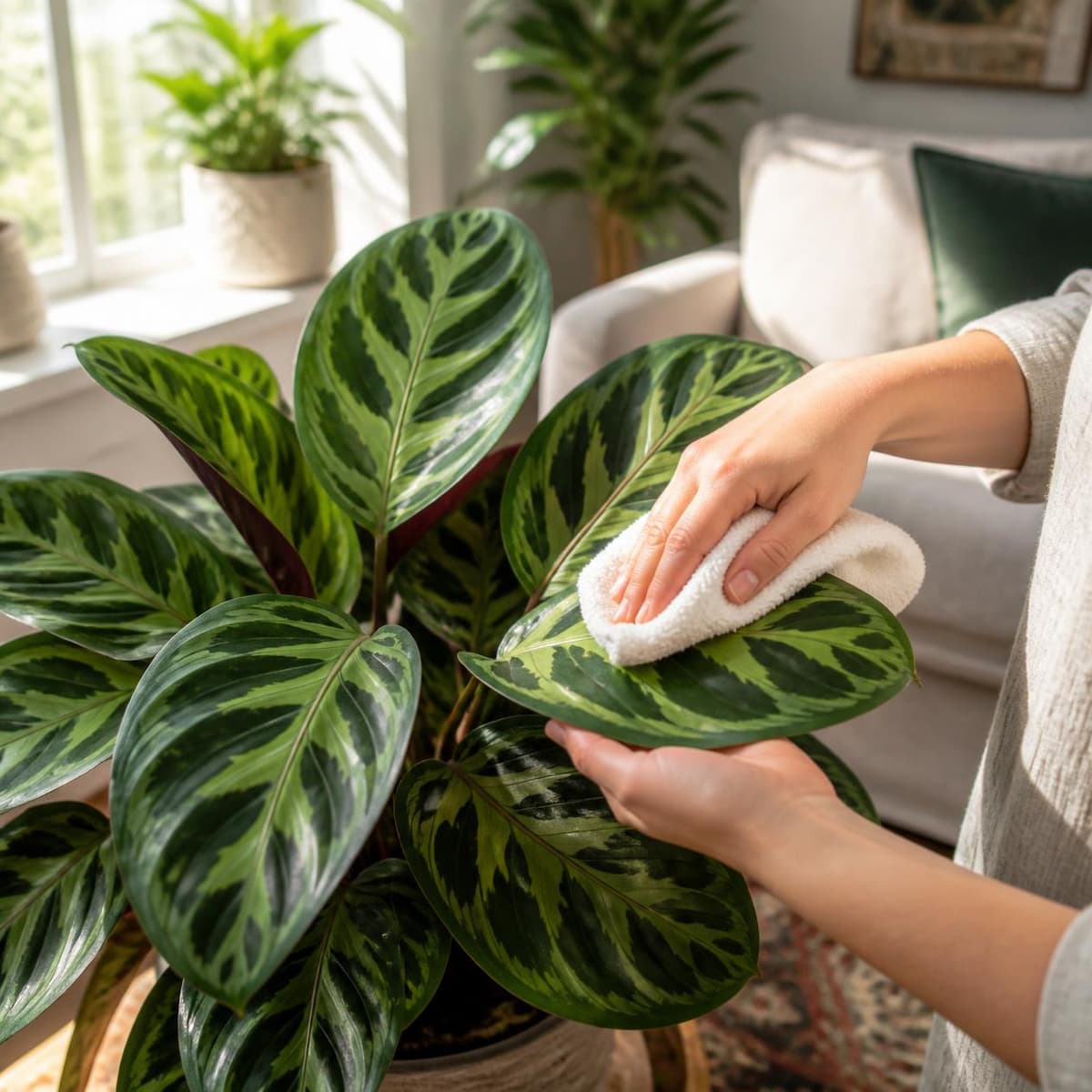
- Gently wipe dust off leaves with a damp cloth (helps with photosynthesis and looks beautiful)
- Rotate the pot every few weeks for even growth
Common Calathea Problems and How to Fix Them
Even experienced growers see issues. Here's how to diagnose and fix the most common problems:
| Problem | Likely Cause | Quick Fix | Prevention |
|---|---|---|---|
| Leaves curling inward | Underwatering or low humidity | Water thoroughly + boost humidity immediately | Consistent watering & humidity routine |
| Brown crispy leaf tips | Low humidity or tap water minerals | Switch to filtered water + humidifier/pebble tray | Filtered water + humidity |
| Yellow leaves | Overwatering or poor drainage | Let soil dry more between waterings; check roots | Proper soil mix & drainage |
| Fading or washed-out patterns | Too much direct light | Move to brighter indirect spot | Proper light placement |
| Drooping / wilting | Underwatering (most common) | Water deeply and check soil moisture | Don't let soil dry out completely |
| Tiny webs or stippling | Spider mites | Isolate plant, wipe leaves, treat with neem oil | Regular leaf cleaning + humidity |
| Slow growth | Low light or lack of nutrients | Move to brighter spot + light fertilizing | Adequate light & seasonal feeding |
How to Propagate Calathea Plants
Propagation is one of the most satisfying parts of growing Calatheas. The easiest and most reliable method for beginners is division.
Best time: Spring or early summer when the plant is actively growing.
What you'll need:
- Clean, sharp knife or scissors
- Fresh potting mix
- Small pots with drainage
- Optional: rooting hormone (not required but helpful)
Step-by-step propagation guide:
- Water the plant the day before to reduce stress
- Gently remove the plant from its pot
- Look for natural clumps or sections with their own roots and at least 2–3 leaves
- Carefully separate the sections using your hands or a clean knife, keeping as many roots as possible on each division
- Pot each division in fresh moist soil at the same depth it was growing before
- Water lightly and place in bright indirect light with high humidity (cover with a clear plastic bag or humidity dome for the first 1–2 weeks if needed)
- Keep soil consistently moist (not wet) for the first few weeks
Buying a Healthy Calathea: Beginner Shopping Guide
When buying your first Calathea:
- Choose plants with firm, vibrant leaves and no yellowing or brown edges
- Check the soil — it should be moist but not soaking wet
- Inspect the undersides of leaves for pests
- Buy from reputable nurseries or garden centers rather than big-box stores with stressed plants
- Start with smaller 4–6 inch pots — easier to manage and cheaper to replace if needed

Seasonal Calathea Care (Especially Important in Offices)
Spring & Summer (Growing Season)
Increase watering frequency slightly, fertilize monthly, and watch humidity as temperatures rise.
Fall & Winter
Reduce watering as growth slows. Dry indoor heating is the biggest enemy — run a humidifier more often. Move plants slightly closer to windows if light levels drop.
Frequently Asked Questions About Calathea Plant Care
How often should I water my Calathea?
Water when the top 1–2 inches of soil are dry. This is usually every 7–10 days indoors, but always check the soil rather than following a strict schedule.
Why are my Calathea leaves curling?
Curling is almost always a sign of underwatering or low humidity. Water thoroughly and increase humidity immediately.
What humidity level does a Calathea need?
Aim for 50% or higher. 60–70% is ideal for most varieties. A humidifier is the easiest solution for offices and dry homes.
Is Calathea toxic to cats or dogs?
No — Calatheas are considered non-toxic to pets, making them excellent choices for homes and offices with animals.
How do I propagate a Calathea?
The easiest method is division in spring. Separate healthy sections with roots and repot them.
Can Calatheas grow in low light offices?
They tolerate low to moderate indirect light better than many plants, but they grow best and keep their colors in bright indirect light.
Why are the edges of my Calathea leaves turning brown?
Usually low humidity or minerals in tap water. Switch to filtered water and boost humidity.
Do Calatheas need special soil?
They like a well-draining but moisture-retentive mix. A peat-free houseplant mix with added perlite works great.
How big do Calatheas get indoors?
Most common varieties stay between 1–3 feet tall and wide, perfect for desks, shelves, and tabletops.
Can I grow Calathea outdoors?
Only in very warm, humid climates (USDA zones 10–12) in shaded spots. Most people grow them as indoor plants year-round.
Your Journey with Calathea Plants
Growing Calatheas successfully as a beginner is all about consistency rather than perfection. Once you dial in the right light, watering routine, and humidity level for your specific space, these plants will reward you with stunning foliage for years.
Start simple: pick an easier variety like the Rattlesnake plant, place it in bright indirect light, keep the soil evenly moist with filtered water, and boost humidity. You'll quickly learn what your plant needs.
Calatheas make wonderful long-term companions in homes and offices. Their dramatic leaves bring life to any space, and watching them "pray" at night never gets old.
Ready to start your Calathea journey? Grab a beginner-friendly variety, set up a simple humidity tray or small humidifier, and enjoy the process. Your future self — and your plant — will thank you. Happy growing!