
Why Isn’t Your Lawn Thriving?
One of my regular experiences is to be called to a home where the client has reached a point of exasperation. They water, feed and even top dress the lawn religiously — but somehow the grass isn’t thriving.
Often during the briefing, they will mention having done this and that based on expert advice they received, but have nothing to show for. Subtly, it is obvious from their talk that you may be the last person they are consulting before they plough the lawn and plant something more “worthwhile”.
An observant me never rushes to conclusions; I will take a walk around the garden. And more often, the reason most of these lawns fail becomes apparent.
Here is what I find.
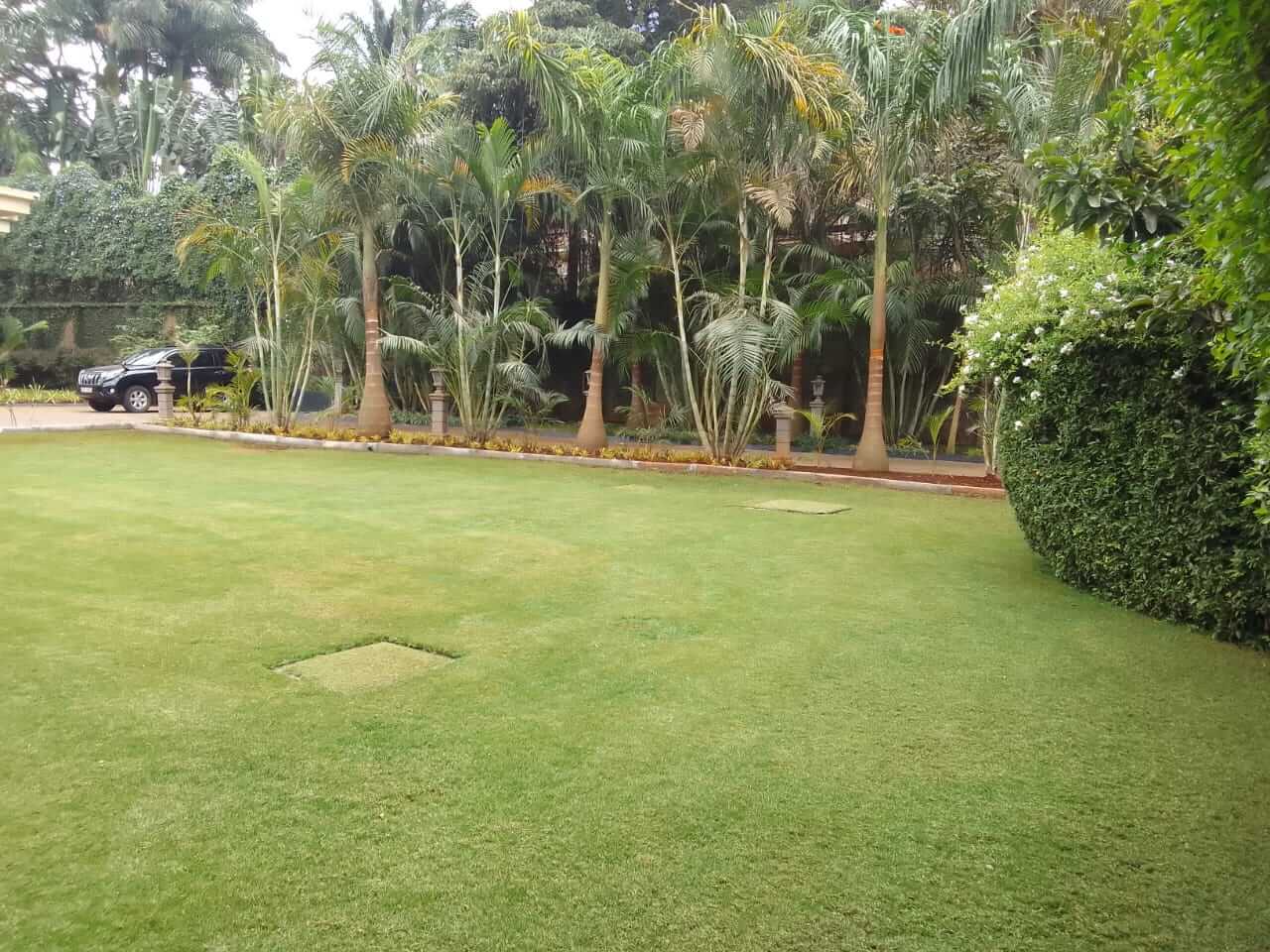
The Wrong Grass for the Wrong Place
It surprises many homeowners when I point this out. The lawn was failing before it even had a chance.
Not all grasses are equal. Buffalo grass, Kikuyu, Bermuda, Paspalum — each has its temperament and its preferred conditions. A shade-loving grass planted in a sun-drenched front yard will struggle no matter how faithfully you water it. Equally, a Kikuyu lawn planted in a heavily shaded compound beneath a canopy of mature trees is fighting a losing battle from day one.
Before you buy a single roll of turf or a bag of seed, ask yourself: how much sun does this space receive? Your answer should drive your grass selection — not the recommendation of the nearest hardware shop attendant.
Poor Soil Preparation
The lawn is only as good as what lies beneath it.
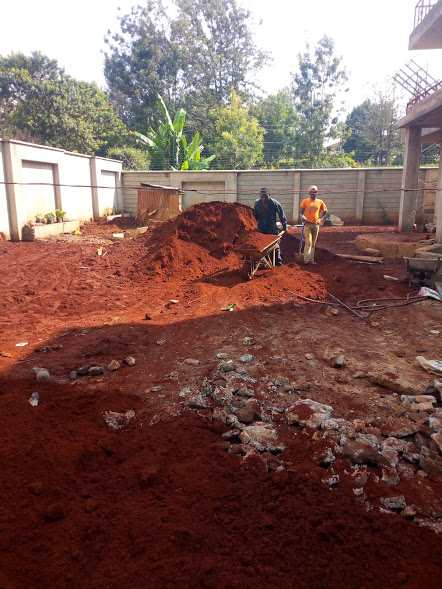
In many of the gardens I visit, the topsoil is either absent or has been compacted during construction. Construction activity is brutal on soil. Heavy machinery, foot traffic, piles of sand and ballast — all of it conspires to destroy the structure of the soil. What remains is a hardpan that neither roots nor water can penetrate.
A good lawn starts with loose, well-aerated soil at least 15 centimetres deep. If your soil passes the screwdriver test — where you can push a screwdriver at least 15 cm into moist soil without undue force — your soil is in reasonable shape. If it refuses, you have a compaction problem that no amount of fertiliser will fix.
Watering the Wrong Way
Watering seems simple. It is not.
The most common watering mistake I see is frequency without depth. The homeowner waters every morning — a quick twenty-minute sprinkle that wets the surface but never penetrates more than a centimetre or two. The grass looks grateful for a few hours, then wilts by midday.
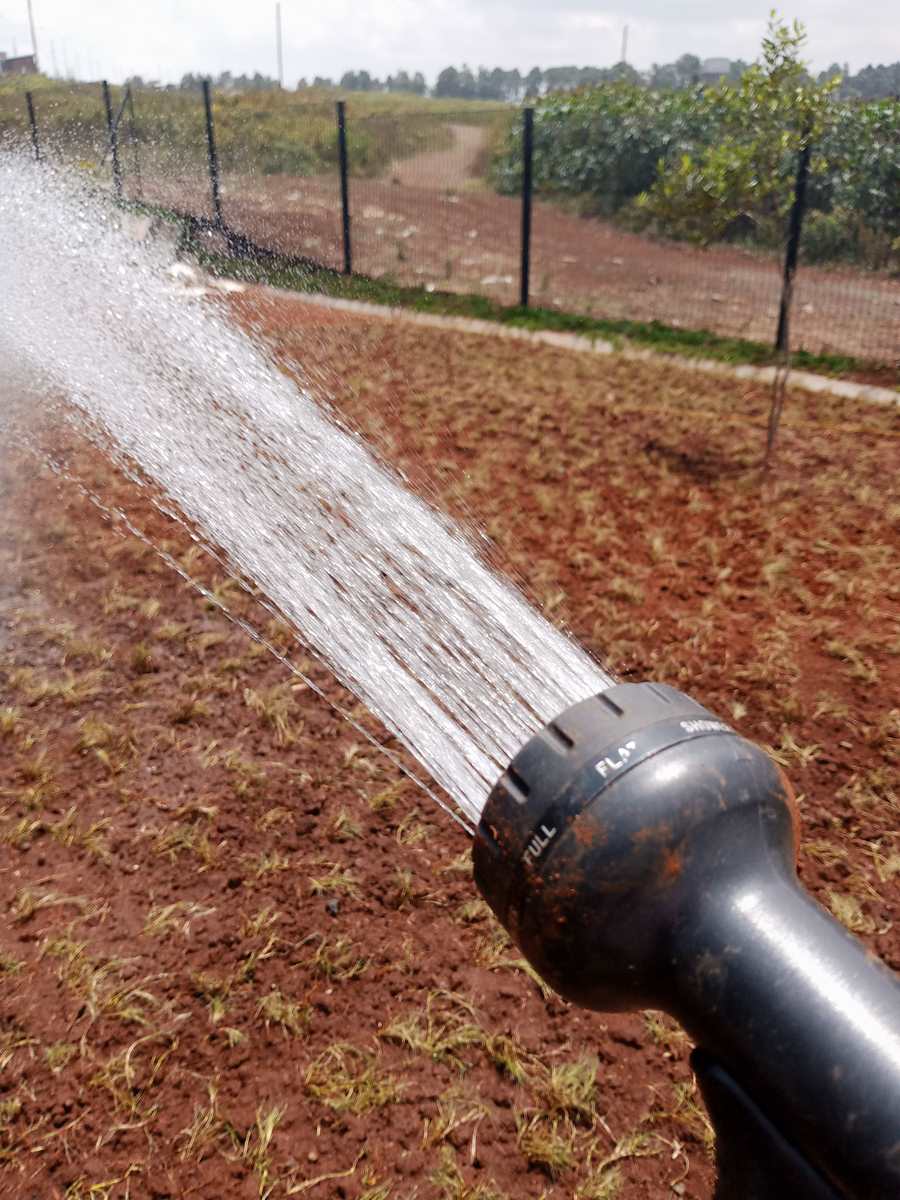
Shallow watering encourages shallow roots. And shallow-rooted grass is fragile grass — prone to drought stress, disease, and thin patches. The goal should always be deep, infrequent watering that drives roots downward in search of moisture. Two to three thorough waterings per week during the dry season is far more effective than a daily sprinkle.
In Nairobi’s climate, early morning watering is ideal. It allows the grass blades to dry off during the day, reducing the risk of fungal disease that thrives on prolonged moisture.
Mowing Too Low
There is a misguided belief that cutting the grass very short means you will not need to mow again for a long time. That logic has ruined more lawns than I can count.
Scalping — mowing below the recommended height for your grass type — removes the leaf blade responsible for photosynthesis. The grass is effectively starved of its ability to feed itself. What follows is a thin, yellowing lawn that becomes an open invitation to weeds, which suffer no such setback and promptly colonise the bare patches.
Most lawn grasses in Nairobi perform best at a height of 4 to 6 centimetres. Never remove more than one third of the leaf blade in a single mowing.
If the lawn has grown tall due to neglect or rain, bring it down gradually over several mowings rather than all at once.
Feeding Without Understanding
Fertilizing a lawn feels like a straightforward act of generosity. You are feeding the grass; surely it will reward you. But feeding at the wrong time, with the wrong product, or at the wrong rate does more harm than good.
A lawn that is under drought stress, waterlogged, or freshly recovering from disease should not be fertilized. Applying nitrogen fertilizer to stressed grass causes fertilizer burn — scorched brown patches that look alarmingly like the very problem you were trying to solve.
Ideally, soil test before you fertilize. Knowing your soil’s pH and existing nutrient levels allows you to apply exactly what is needed. In the absence of a soil test, a balanced slow-release fertilizer applied at the onset of the long rains is a reasonable starting point for most Nairobi lawns.
Ignoring Lawn Pests and Disease
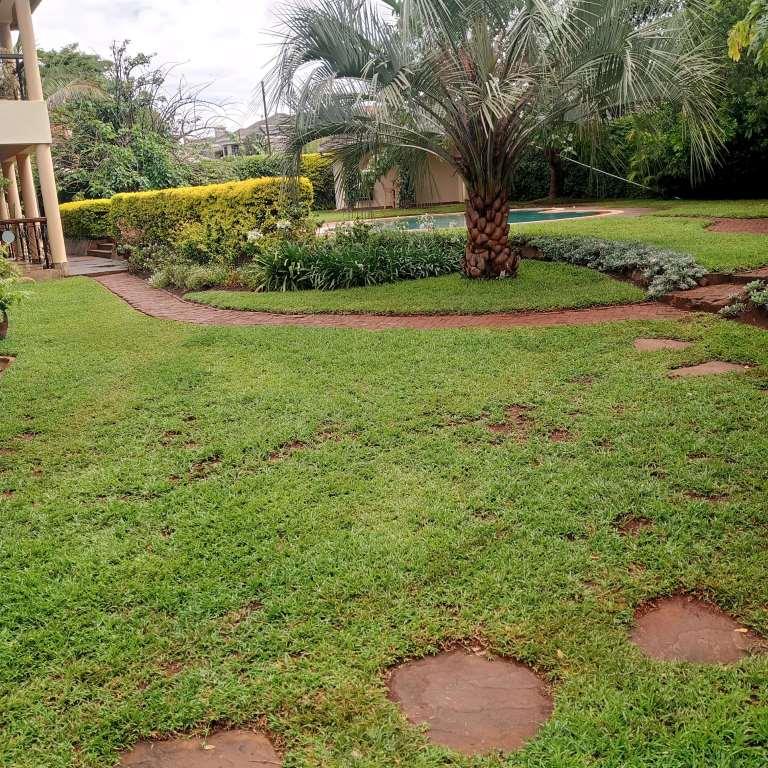
A lawn that is struggling despite good care deserves a closer look — literally.
Get down on your hands and knees and examine the grass closely. Army worms, sod webworm larvae, and cutworms are among the common culprits in Nairobi lawns. They work at night, chewing through grass blades and stems, and what you see by day is the aftermath: patches of thinning, dying grass that appear almost overnight.
Fungal diseases are another frequent visitor, particularly during humid periods. Circular yellow or brown patches, grass that pulls up easily from the roots, or a whitish coating on the blades — these are all worth investigating. Early identification means easier, cheaper intervention.
The Soil pH Problem Nobody Talks About
Soil pH is the silent saboteur of many a struggling lawn.
Most lawn grasses prefer a soil pH between 6.0 and 7.0. Outside that range, nutrients become chemically unavailable even when they are physically present in the soil. You can fertilise until you are exhausted but if the soil is too acidic or too alkaline, the grass simply cannot access what it needs.
A simple soil pH test, available from most agricultural stockists in Nairobi, will reveal this in minutes. Overly acidic soils can be corrected with lime; alkaline soils may need elemental sulphur or acidifying fertilisers. The correction takes time, but the results are worth the patience.
Before You Plough It Up
By the time I finish my walk around the garden, the homeowner is usually quiet. The problem is rarely mysterious. It is almost always one of the issues above — or a combination of several.
A failing lawn is not a judgement on your dedication. It is usually a signal that somewhere along the way, one of the fundamentals was missed. Get those right, and the lawn will respond.
Grass, after all, wants to grow. That is its nature.
— Oscar K. Ludelu, Crystal Gardens
Is your lawn struggling?
We diagnose and restore lawns across Nairobi. Let us take a walk around your garden.
Get in Touch