
30 Common Trees Used in
Landscaping in Kenya
Whenever we get a bill of quantities for trees to be used in a landscaping project in Kenya, you can almost bet on what’s on this list before even opening it. A few brave landscape architects and adventurous homeowners dare to suggest less familiar species — but the majority prefer to go with what is already working. These 30 trees have proved their mettle across Kenya’s diverse climates. This is the most comprehensive guide of its kind.
Trees Used in Landscaping in Kenya: What Defines the List?
The most common trees used in landscaping in Kenya are both indigenous and exotic. The indigenous species are playing on home ground — they know the soils, the rains, the altitude. The exotics, though “immigrants,” have long since made themselves at home, having settled in for decades if not centuries. Both groups have earned their place on Kenya’s landscape stage, and both appear on this list.
What makes a tree earn a permanent place on a Kenyan landscaper’s go-to list? It has to perform reliably across variable conditions — from the red murram soils of Thika to the black cotton of the Rift, from the cool mist of Limuru to the scorching afternoons of Kitengela. It has to look good doing it. And it has to be available in the nurseries when you need it.
“Although a few landscape architects and homeowners dare to be brave and suggest less common trees, the majority prefer to go with what is already working — trees that have proved their mettle in Kenya’s diverse climate.”
This is that list. Thirty trees, all tried and trusted in Kenyan landscaping — each one profiled with its full botanical name, its standout ornamental features, how it performs on the ground, and its mature size so you can plan with confidence.
30 Trees Used in Landscaping in Kenya
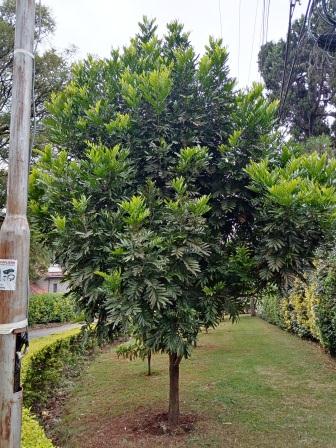
Thika Palm / Japanese Fern Tree
Despite its common name, the Thika Palm is not a palm at all — it is a flowering tree whose graceful, arching, fern-like pinnate leaves create a beautifully tropical, palm-like appearance. The glossy, dark-green foliage is elegant year-round, and the canopy is open enough to allow grass to grow comfortably beneath it — a practical quality clients genuinely appreciate. Growth is not rapid, making it highly manageable in urban settings. Native to parts of East Africa, Madagascar, Sri Lanka, and India.
A favourite for urban gardens due to its compact form and slow, predictable growth. Widely planted in home gardens and along roadsides, particularly around Thika and central Kenya — where it gets its popular local name. Works beautifully as an avenue tree lining a driveway, or as a refined specimen in a formal garden layout.
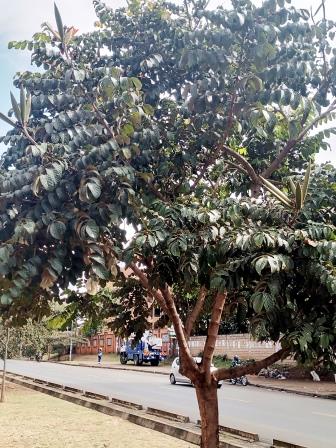
African Tulip Tree / Nandi Flame
An old favourite in old Nairobi gardens and around rural Kenya — its widespread use is largely due to it being indigenous. This tree belongs here. Oddly, it is the only species in its genus within the entire Bignoniaceae family, which makes it botanically unique. Grown for its spectacular, showy, bell-shaped flowers in vivid orange-red and its large, handsome pinnate leaves. A most prized variety is the yellow Nandi Flame — if you ever lay your hands on one, grab it. You will rarely find it.
Used as a specimen tree in tropical and sub-tropical climates across Kenya. Excellent as a focal tree for large gardens, parks, hotel grounds, and open institutional spaces. The yellow variety is a rare collector’s specimen and a true trophy for any garden lucky enough to have it.
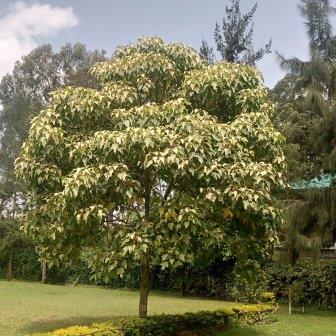
Candle Nut Tree
Grown primarily for its beautiful foliage — large, soft, silvery-green leaves that catch the light in a distinctive way, creating a luminous, textured canopy unlike most other trees. Fast-growing with a broad, spreading form, it establishes quickly and fills a space with confidence. The pale silvery underside of the leaves creates a lovely two-toned effect in a breeze.
An excellent avenue and screening tree wherever its scale can be accommodated. A fine example of its use in Kenyan landscaping can be seen at Sankara Hotel in Westlands, where it has been planted along the external wall to great effect — the silvery foliage creates a soft, elegant screen while adding real visual interest to the building facade.
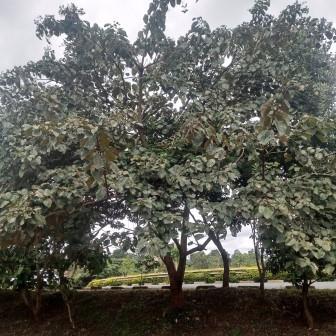
Large-leaved Cordia / Mringaringa
A superb tree for both the home garden and commercial spaces. The white flowers give off a pleasant display against the pale green leaves, and the open canopy structure allows undergrowth to thrive beneath — an important quality in landscape design where ground coverage under trees is always a challenge. A genuinely versatile and well-behaved indigenous tree.
This tree has been used with great success in the landscaping at Sarit Centre in Westlands — delivering great shade, managed growth, and the impressive achievement of fitting a great many trees into a very small space without crowding. That performance alone speaks to its adaptability. Ideal for commercial developments, shopping centres, office parks, and residential gardens alike.
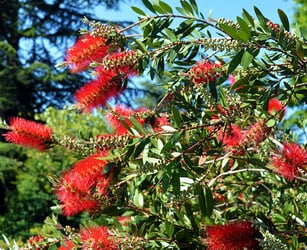
Bottlebrush / Firebrand
Originally from Australia, but this tree grows effortlessly in Kenyan landscapes. Characterised by arching branches and brilliant crimson-red flowers in dense cylindrical spikes — the classic bottlebrush form that gives it its name. The flowers are striking and long-lasting, and the tree’s arching, graceful habit gives it character even when out of bloom. Very tolerant of dry, harsh conditions.
Forms excellent informal hedges and screens. Ideal for dry-land areas — Kitengela, Syokimau, Naivasha, and Athi River are all landscapes where this tree thrives and is increasingly popular. Grows to about 8 m high with a spread of around 1.5 m, making it a neat, manageable choice for small gardens and narrow planting strips.
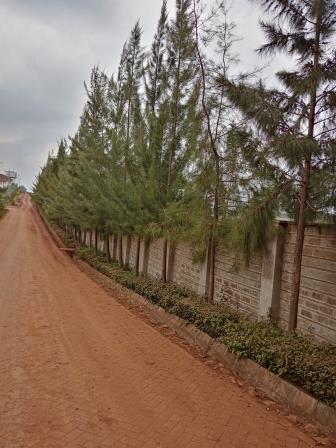
Casuarina / Whistling Pine / She-Oak
An erect to spreading tree with hanging, drooping branch tips, grey-green shoots, and scale-like leaves that give it an almost pine-like appearance without being a true conifer. The small, thin leaves are exceptionally adapted to dry and windswept conditions — they reduce water loss in ways that most trees cannot. In strong gales, the foliage produces a distinctive, haunting whistle that gives the tree one of its most poetic names.
Widely used in Kenyan landscaping as a windbreaker in exposed and windswept sites. Excellent for coastal landscapes, dryland properties, and any site subject to strong prevailing winds. Plant in rows as a living screen or windbreak. Grows to 15 m high and 3–8 m wide — a very effective screening tree for large properties.
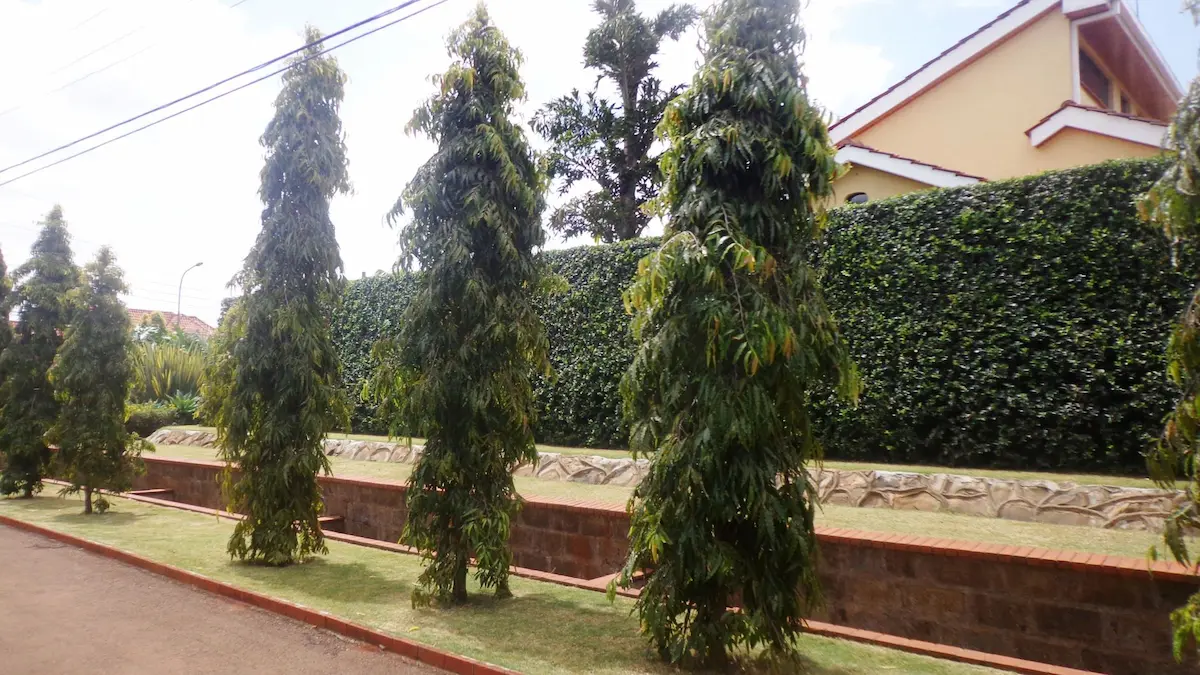
False Ashoka / Indian Mast Tree
A strikingly elegant, narrow, columnar tree with long, pendulous, wavy-edged leaves that ripple in the wind in a way that is genuinely mesmerising. The tight, upright form creates a naturally pyramidal or mast-like silhouette that is highly distinctive in any landscape setting. New growth flushes in attractive reddish and bronze tones before maturing to glossy, dark green. Dense and ornamental throughout the year.
Ideal for narrow spaces, avenue planting where width is restricted, and as a tall screening tree with a minimal footprint. Popular along entrance drives, boundary walls, and as a vertical accent in formal garden designs. Pairs beautifully with Italian Cypress for disciplined, structured landscape compositions. Very widely used in Nairobi’s institutional and commercial landscapes.
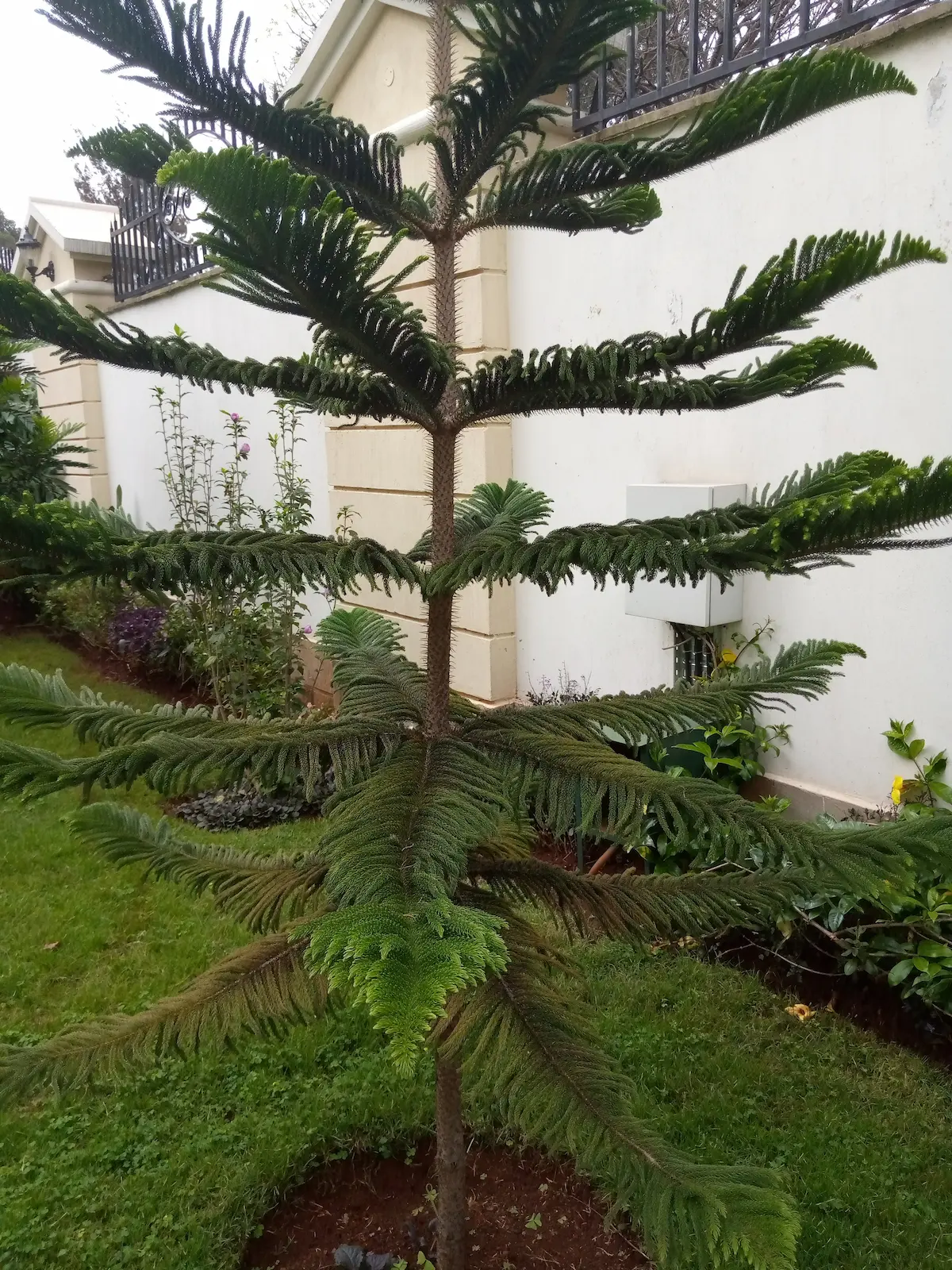
Norfolk Island Pine
A conical, coniferous tree with one of the most distinctive silhouettes of any tree in Kenya’s landscape — perfectly symmetrical, whorled branches arranged in horizontal tiers like a staircase, giving it an almost architectural, geometric quality. On young trees, the leaves are narrowly wedge-shaped; on mature trees they become crowded, scale-like, and incurved. Its geometry is so precise it almost looks designed rather than grown.
A good garden tree precisely because it is less obstructive than many large trees — its narrow, upward growth habit takes up surprisingly little ground space for its height. Works beautifully as a vertical accent or prominent specimen in gardens where a conifer character is desired. Pairs well with formal tropical planting and works in both highland and warm coastal settings.
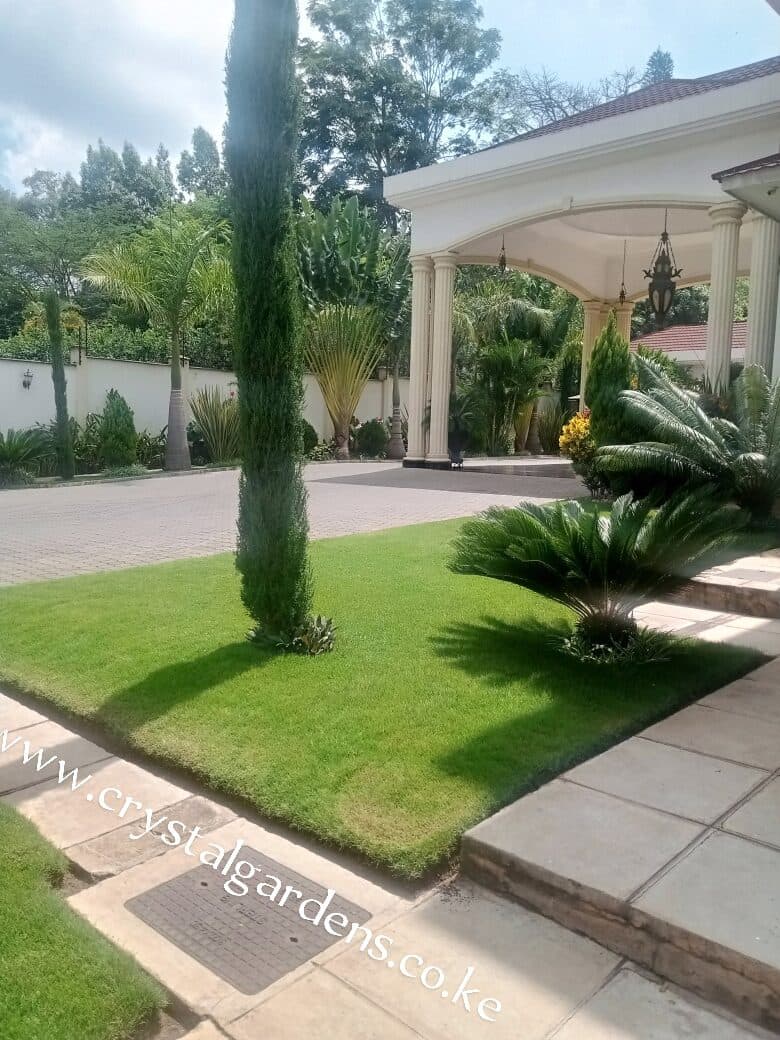
Italian Cypress
Narrowly conical to strictly columnar, with fused and flattened branches forming the very narrowest of pencil-like trees — a vertical exclamation mark in the landscape. No other tree delivers such an emphatic upward line in such a small footprint. The dark, dense, blue-green foliage is evergreen and maintains its dramatic form with virtually no maintenance. Its formal character is well established and always reads well in designed landscapes.
Ideal for small spaces where a tall vertical accent is needed without any lateral spread. Perfectly suited to driveways — planted in pairs or rows to frame an arrival sequence. Also used as focal points in formal garden designs and alongside gates and entrance pillars. Particularly popular in highland Kenya: Karen, Limuru, Eldoret, Nakuru, and the cooler Nairobi suburbs.
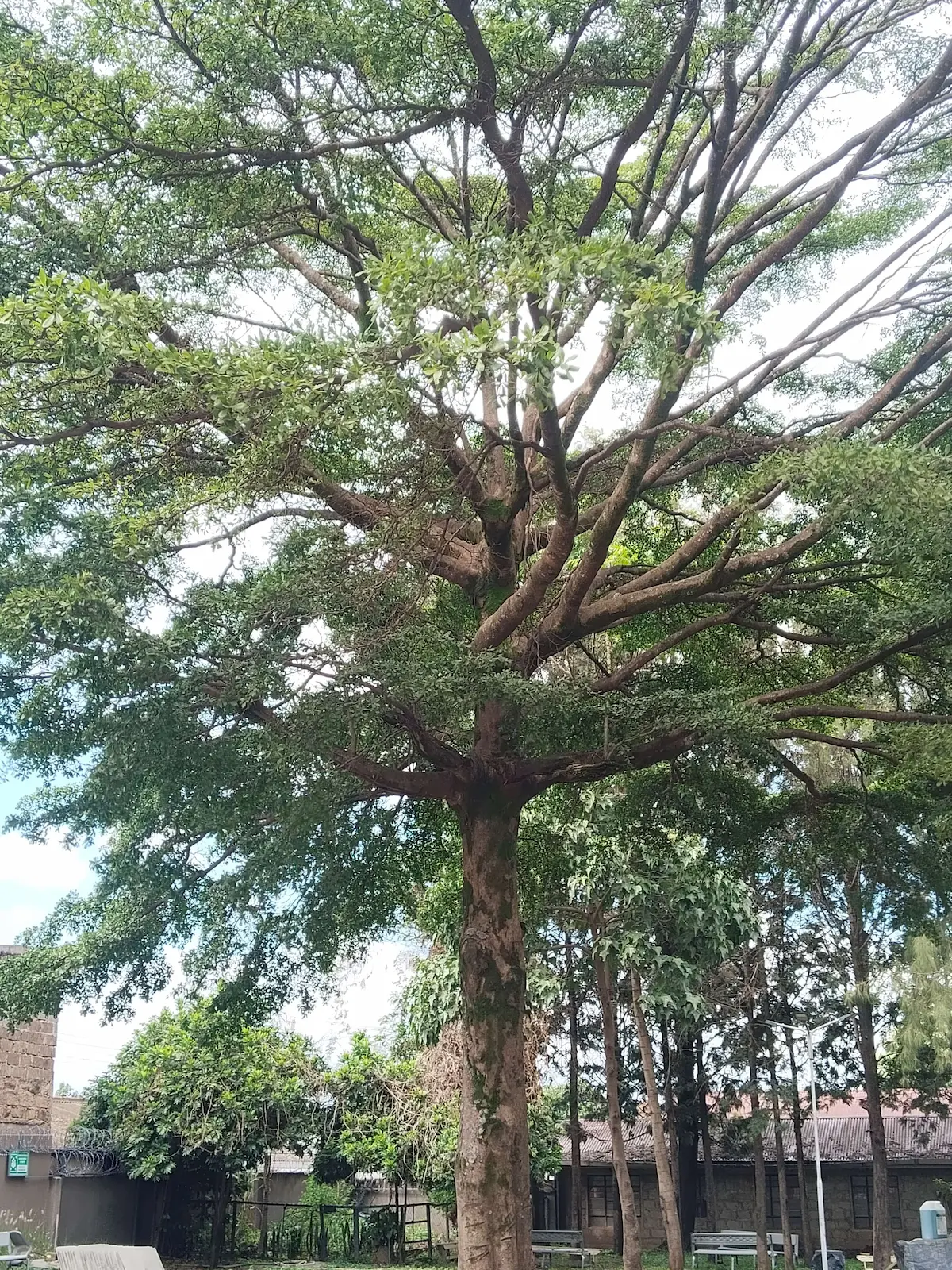
Umbrella Tree / Madagascar Almond
Used to be a very popular garden tree, and with very good reason — its storied, layered, horizontal growth pattern creates a tiered canopy that is architecturally beautiful and instantly recognisable. I have yet to find a tree that casts as pleasant a shade as Terminalia. It is dappled, generous, and sits at just the right height for human-scale outdoor use. A tree of great structural elegance that deserves a revival in modern Kenyan landscape design.
Superb as a street tree, car park shade tree, or garden specimen where its layered form can be appreciated from a distance. One practical note from field experience: trees can damage paving and parking surfaces if the crown is not managed — keep root zones in soft ground and plan for eventual canopy spread on any paved areas nearby. Managed well, it is an outstanding urban tree.
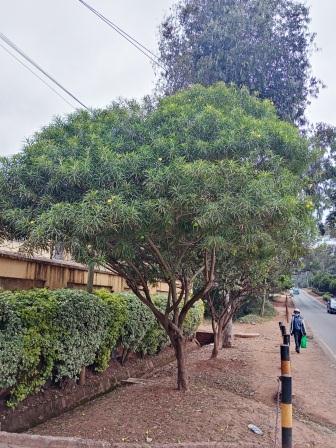
Yellow Oleander / Be-Still Tree
One of the most commonly used trees in landscaping in Kenya — an evergreen small tree from South America and the West Indies that has become thoroughly at home here. Cultivated for its showy, funnel-shaped flowers in a warm, long apricot-yellow that is produced almost continuously. The narrow, glossy leaves are attractive in their own right. Note: seeds are highly toxic if ingested — important where children are present.
Ideal in small gardens as it rarely grows beyond 8 m high and 3 m wide — a very manageable footprint. Widely used in municipal planting, road medians, and roundabouts across Kenya for its drought tolerance and continuous colour. Can also be used effectively as an informal hedge or boundary screen. Very common in Mombasa, Naivasha, Nairobi, and most warm Kenyan towns.
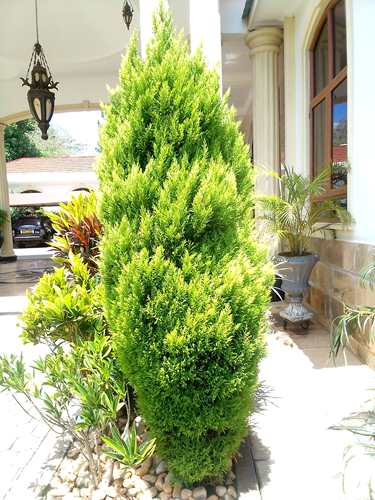
Golden Oriental Arborvitae / Golden Thuja
A compact, upright, golden-yellow conifer that retains its warm, glowing colour throughout the year — a rare and valuable quality that gives it consistent ornamental impact in any season. The flat, fan-like sprays of foliage are densely arranged, giving the tree a fine, refined texture. Very slow-growing, making it highly predictable and easy to maintain. The gold colour provides a vivid contrast against green hedges and lawn.
Popular for formal and structured garden designs, particularly in highland Kenya where cooler conditions suit it well. Used as a formal hedge, topiary subject, or as architectural accent planting alongside entrance steps, gates, and pathways. Its golden colour creates strong contrast in compositions that would otherwise be uniformly green. A very useful tool in the formal landscape designer’s kit.
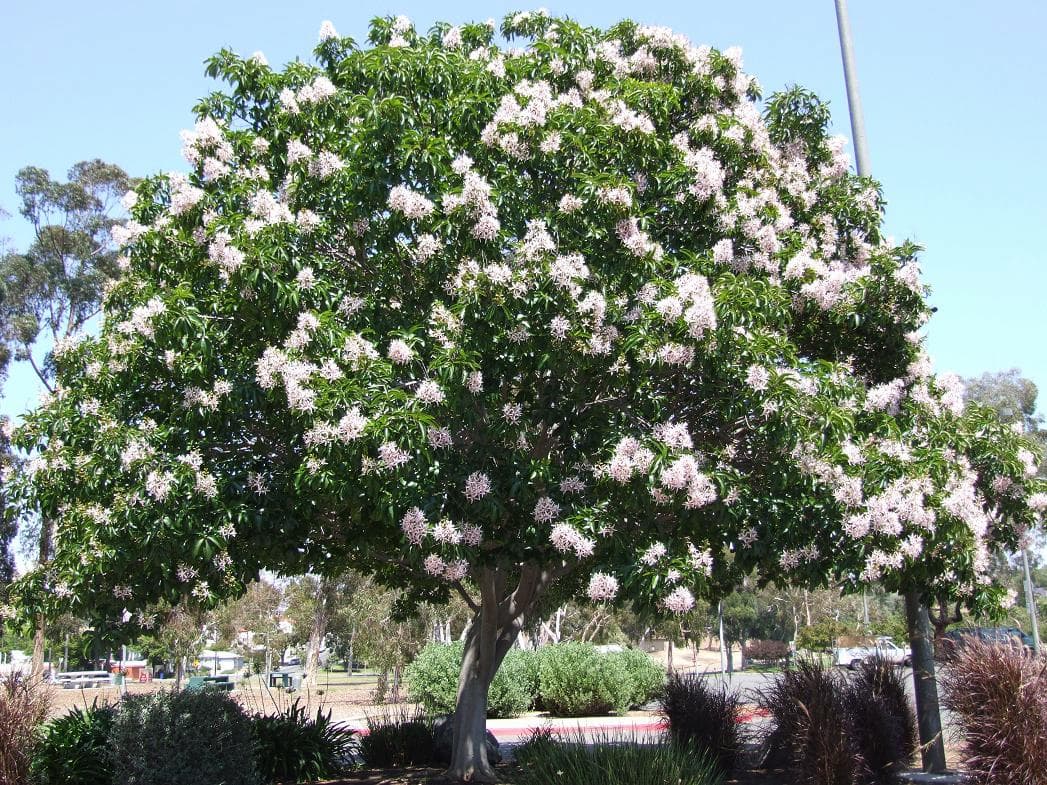
Cape Chestnut
One of Africa’s most celebrated flowering trees. Large, showy clusters of pink to mauve flowers cover the canopy in October–December, transforming the entire tree into a cloud of colour. The flowers are fragrant, with distinctive pink-spotted petals, and attract sunbirds and bees in abundance. Dark, glossy, oval leaves provide a handsome, evergreen backdrop year-round. A tree that rewards patience — it flowers more prolifically and magnificently with age.
An outstanding specimen tree for medium to large gardens, parks, and roadside planting. Widely planted along Nairobi’s highland residential streets, where it performs magnificently in the cool, high-altitude conditions. Works beautifully as a single focal specimen on a lawn or in pairs flanking a main entrance. Among the finest of all highland Kenya’s flowering trees.
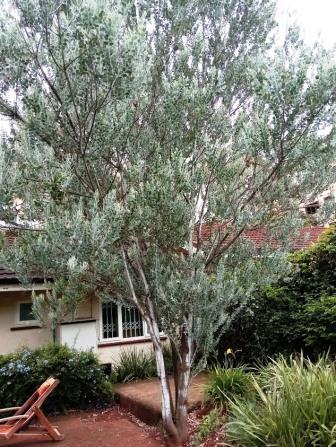
Sweet Wattle / Long-podded Acacia
A graceful acacia species with fine, bi-pinnate leaves that create a delicate, feathery texture characteristic of the acacia genus. Fragrant, bright yellow pompom flowers are borne in clusters, attracting bees and sunbirds. The light, open canopy casts a gentle, dappled shade that allows grass and underplanting to thrive beneath. The gnarled trunk and branches develop great sculptural character with age — old specimens are particularly beautiful.
Useful specimen tree for savannah-style gardens, dryland landscapes, and naturalistic planting schemes across Kenya. Its light canopy makes it a safer choice near buildings and paved surfaces where root damage and deep shade are concerns. Works well in groups for a bush-like woodland effect, or individually as a character tree in open lawn areas.
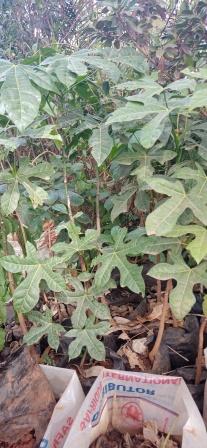
Illawarra Flame Tree
A stunning Australian tree that performs remarkably well in Kenyan landscapes. In dry seasons, the entire canopy of maple-like, deeply lobed leaves can drop, and the tree then covers itself in masses of brilliant red, bell-shaped flowers — creating one of the most dramatic seasonal displays of any tree in cultivation. The smooth, greenish-grey bark is also attractive, and the handsome leaves provide ornamental interest throughout the growing season.
An excellent specimen tree for medium to large gardens, commercial developments, and hotel grounds where its spectacular seasonal flowering creates a memorable impression. Plant where the display can be seen and appreciated — a lawn setting or a slightly elevated position works best. Performs best in warm, well-drained sites across Kenya’s mid-altitude and warmer highland zones.
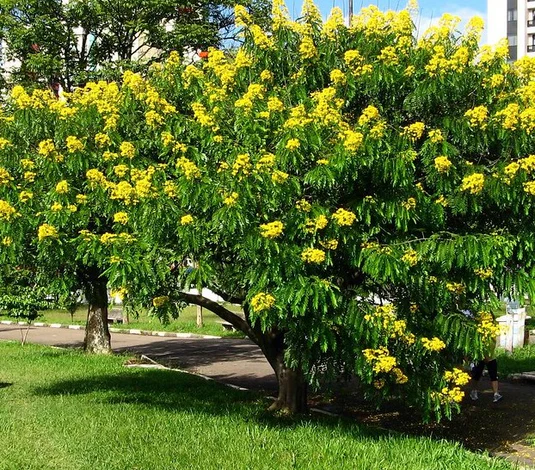
Golden Shower / Spectacular Cassia
A fast-growing, medium-sized tree that produces spectacular masses of bright golden-yellow flowers in dense terminal clusters — creating a blaze of colour that can cover the entire canopy simultaneously. The flowering season is a genuine spectacle and makes this one of the most visually impactful trees available in Kenya. Large, bright-green pinnate leaves are attractive and lush throughout the year when the tree is not in bloom.
Excellent as a fast-growing specimen tree for large gardens, parks, and roadside planting. Makes a superb avenue tree where rows can create a spectacular tunnel of gold at flowering time. Widely used in institutional landscaping across Kenya. Its fast growth makes it a valuable pioneer tree for quickly establishing shade and structure in new developments while slower, more permanent trees establish around it.
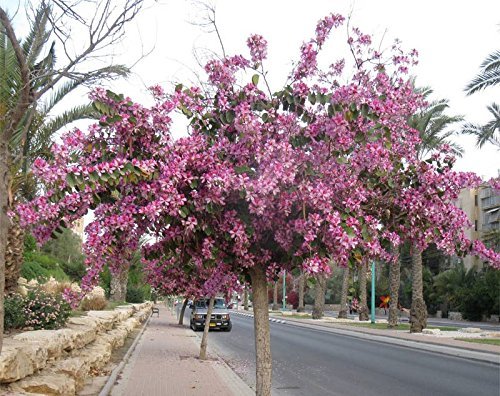
Orchid Tree / Mountain Ebony
One of the most floriferous small trees in Kenya’s landscape palette. Large, orchid-like flowers in shades of pink, lavender, and white with delicate veining cover the tree profusely before the distinctive bilobed — butterfly-shaped — leaves emerge. The unusual leaf shape is ornamental and highly recognisable even when the tree is not in flower. Lightly fragrant flowers attract bees and butterflies in abundance.
Ideal for small to medium gardens, courtyard plantings, hotel entrance courts, and as a patio specimen. Its modest size makes it very versatile in confined spaces. Can be grown as a multi-stemmed shrub or trained into a single-trunk standard tree. Very popular in warm coastal and lowland landscapes — Mombasa, Malindi — and in Nairobi’s warmer suburbs, where it is a dependable performer.
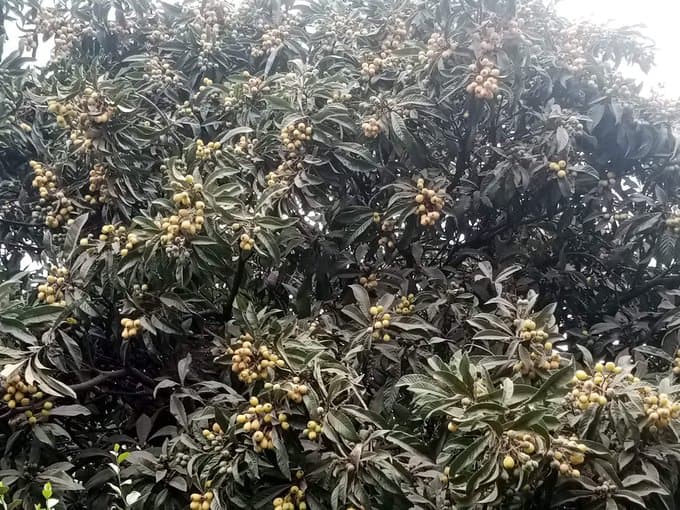
Loquat / Japanese Medlar
A handsome, compact evergreen tree with large, bold, leathery, dark-green leaves that have a distinctive corrugated texture and pale, woolly undersides. Clusters of small, fragrant white flowers appear in autumn and winter, attracting bees and birds, and are followed by clusters of sweet, edible orange-yellow fruits in spring. The bold foliage creates a lush, tropical appearance year-round, and the tree tolerates highland Kenya conditions extremely well.
An excellent small specimen tree for gardens where both ornamental quality and productive fruit are desired — a practical and beautiful combination. The bold leaf texture makes it a strong design element in mixed planting compositions. Very popular in highland Kenya — Nairobi, Limuru, Nakuru, and Eldoret — where it fruits well in the cool conditions. Works beautifully as a courtyard or entrance tree.

Weeping Fig / Benjamin Fig
One of the most widely used and versatile landscape trees in Kenya. The glossy, small, dark-green leaves and graceful, weeping branch tips create an elegant, refined canopy that is hard to replicate with any other tree. Responds superbly to clipping and shaping — which makes it the tree of choice for formal hedges, topiary, and shaped avenue trees. The vigorous surface root system is worth planning around in paved areas.
Universally used across Kenya’s urban landscapes — as avenue trees on major roads, as clipped formal hedges and screens in commercial developments, and as specimen shade trees in large gardens. Can be shaped into single or multi-trunked standards. Widely seen in Nairobi’s commercial districts, shopping malls, hotel grounds, and upmarket residential estates. One of the hardest-working trees in Kenyan landscape design.
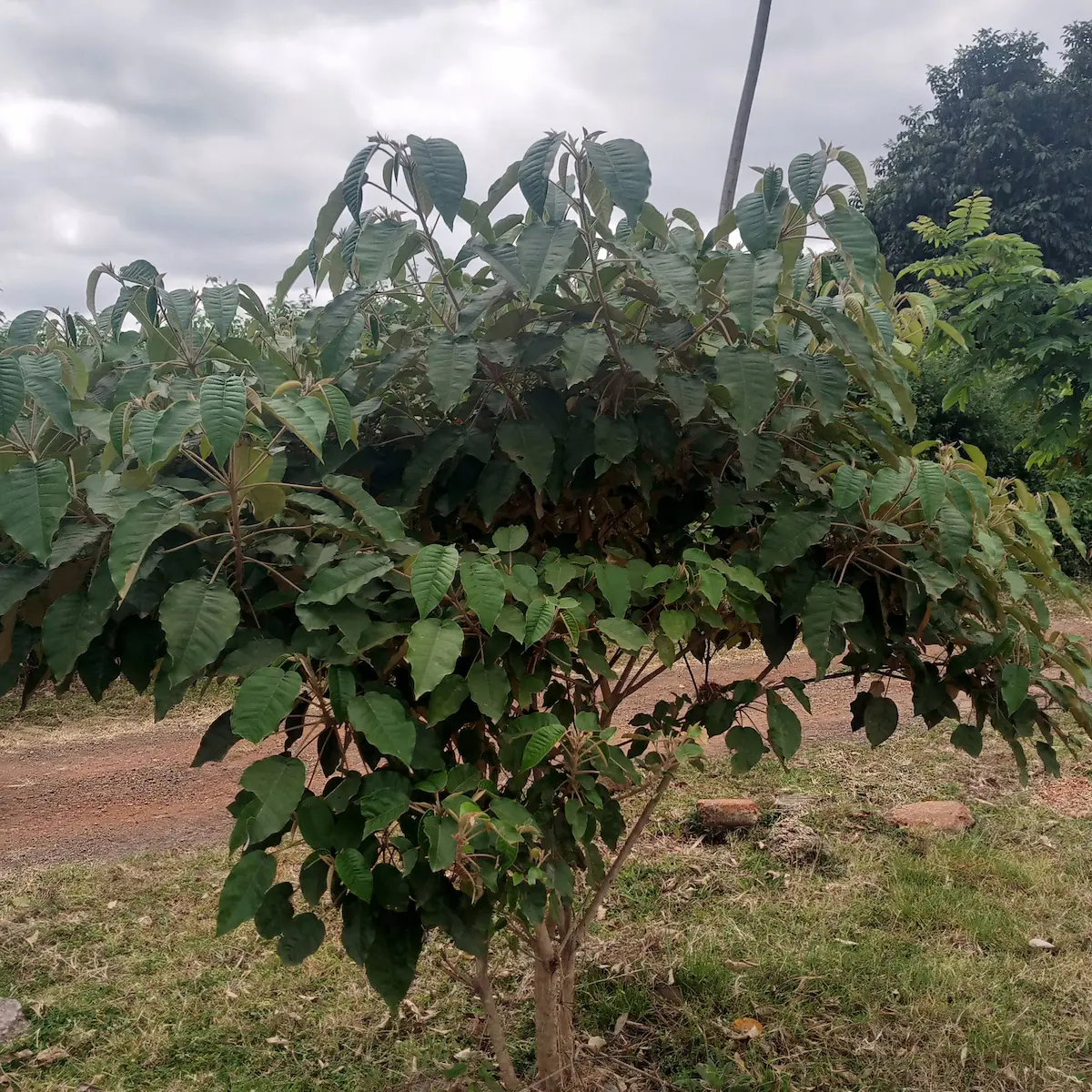
Croton / Mukinduri
A beloved highland indigenous tree with a wide, flat-topped canopy and attractive silver-green leaves that shimmer beautifully in the breeze. The silvery-white underside of the leaves creates a lovely two-toned foliage effect that is particularly striking in wind. Large quantities of fruit attract hornbills, pigeons, and monkeys — making it one of the best wildlife trees for the Kenyan garden. Fast-growing and developing a majestic form with age.
One of the best shade and wildlife trees for Nairobi and Kenya’s highland landscapes. Plant as a large specimen in spacious gardens, parks, and along driveways where its eventual spread can be appreciated. Excellent in naturalistic and indigenous planting schemes. Fast enough to provide meaningful shade within a few years, yet ultimately forms a truly majestic large tree worth planning for.
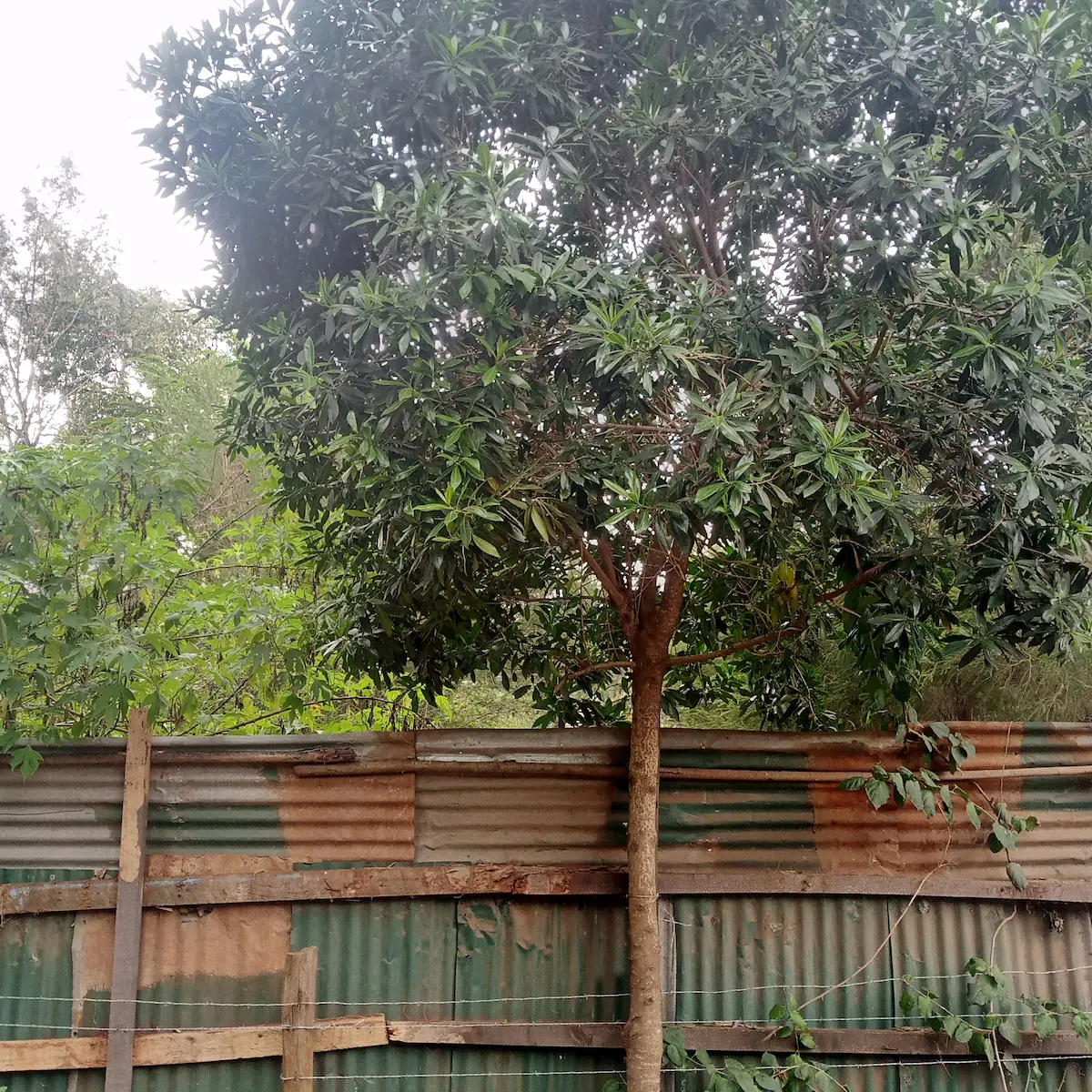
East African Greenheart / Mutata
A handsome, dense, evergreen indigenous tree with glossy, dark-green leaves that have a distinctive peppery, spicy fragrance when crushed. The rounded, well-formed canopy provides excellent year-round shade. Historically significant in East African ethnobotany — the leaves, bark, and roots have long been used medicinally across the region. A tree of quiet, dignified beauty that deserves a far wider place in Kenyan landscape planting than it currently occupies.
An excellent evergreen specimen and shade tree for highland gardens, institutional grounds, and indigenous planting schemes. The dense, well-formed canopy also works as a privacy screen or windbreak tree. Very appropriate for heritage landscapes, indigenous gardens, and any project that values the integrity of Kenya’s botanical heritage. A tree that says something meaningful about its planting.
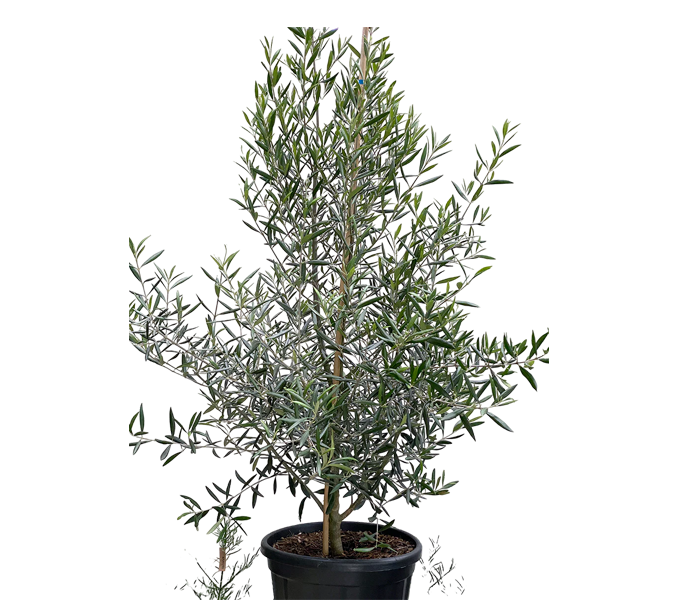
African Wild Olive / Mutamaiyu
A distinguished, evergreen indigenous tree with narrow, grey-green leaves that shimmer silver in the breeze — lending Kenyan landscapes a Mediterranean quality that is rare in tropical planting. The gnarly, grey bark becomes deeply furrowed with age, giving mature specimens great character and gravitas. Small, black olive-like fruits are eagerly taken by birds. Some Kenyan specimens of this tree are centuries old — planting one is a genuine long-term investment.
Outstanding specimen tree for highland gardens, farm homesteads, and hillside properties where long views and a sense of permanence are valued. The silver foliage provides excellent contrast against darker-leaved plants and green lawn. Works well as a windbreak and in water-wise, low-maintenance landscape design. One of the most character-laden trees available to Kenyan landscape designers.
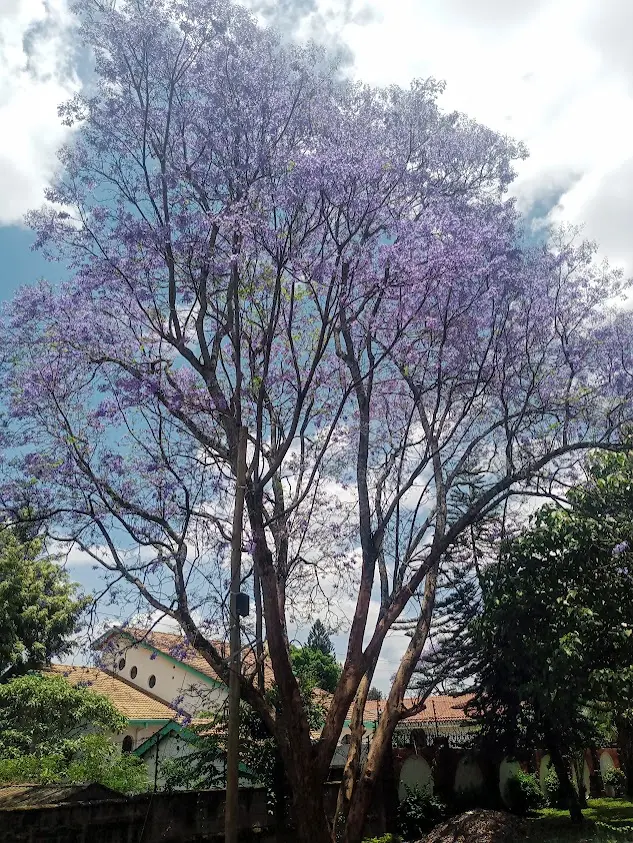
Jacaranda
Nairobi’s most iconic street tree — and arguably the most photographed tree in all of Kenya. An explosion of lilac-purple trumpet flowers covers the entire canopy in October–December before the long rains, creating a breathtaking purple carpet across streets, gardens, and rooftops. The fine, bi-pinnate leaves create a delicate, fern-like texture that provides filtered, dappled light throughout the year. When a Nairobi street lined with Jacarandas comes into full flower, it is quite simply unforgettable.
Street and avenue planting, large garden specimen, and park tree. Best in full sun with room for its spreading canopy to develop freely. A pair flanking a main entrance creates an unforgettable seasonal arrival moment. Requires good altitude and cool nights to flower at its most spectacular — at its finest in Nairobi, Limuru, Nakuru, and the highlands generally.
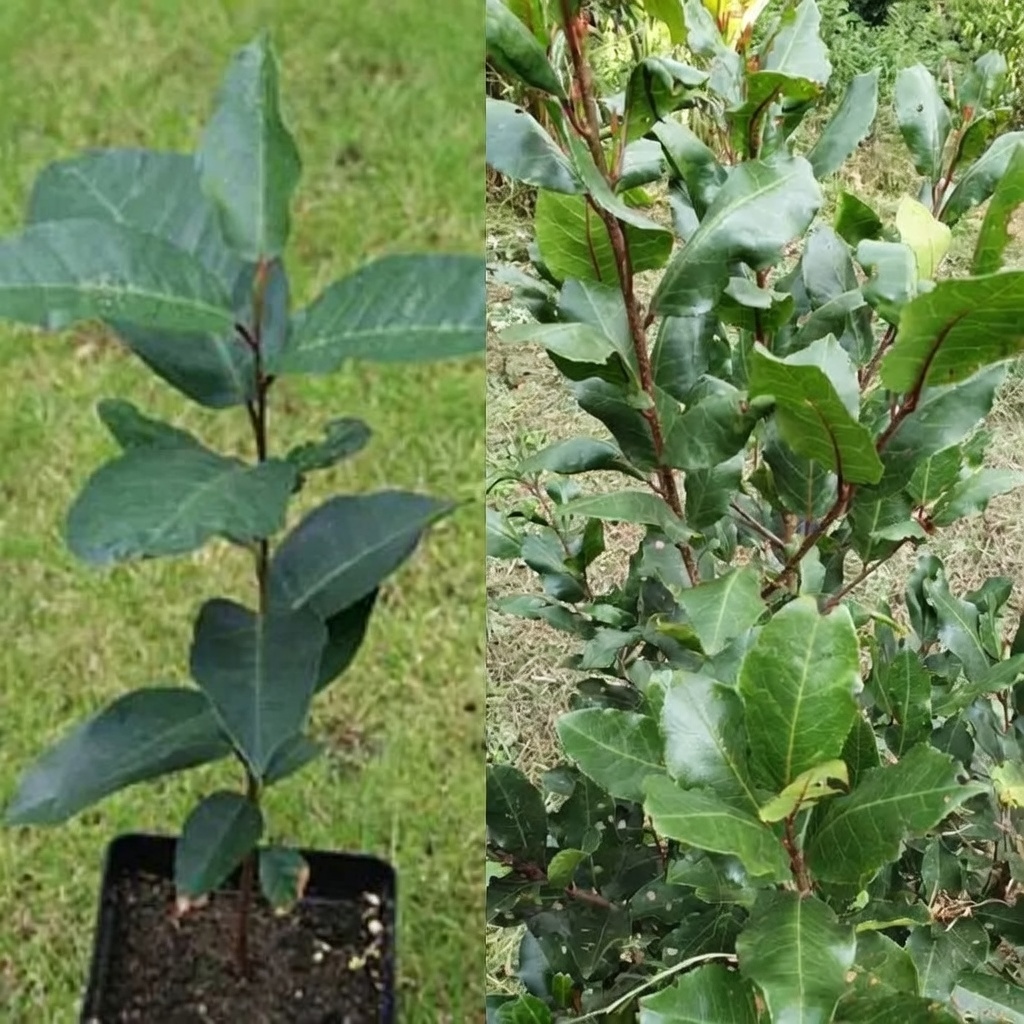
African Cherry / Red Stinkwood / Muiri
A magnificent, large, evergreen highland forest tree with a dense, rounded crown of dark, glossy leaves. The scaly, dark reddish-brown bark is distinctive and becomes deeply furrowed on older trunks — giving mature specimens tremendous visual presence and gravitas. Small, white, star-shaped flowers attract insects in spring, followed by small cherry-like fruits. This is also a tree of conservation significance — planting it in a landscape setting contributes meaningfully to its survival outside the forest.
An outstanding heritage and specimen tree for large highland gardens, farm landscapes, institutional grounds, and forest-edge properties. Its dense, evergreen canopy makes it exceptional for shade and privacy. One of the most worthwhile of all indigenous planting choices — beautiful, ecologically significant, and long-lived. Every highland property that plants a Muiri makes a statement about what it values.
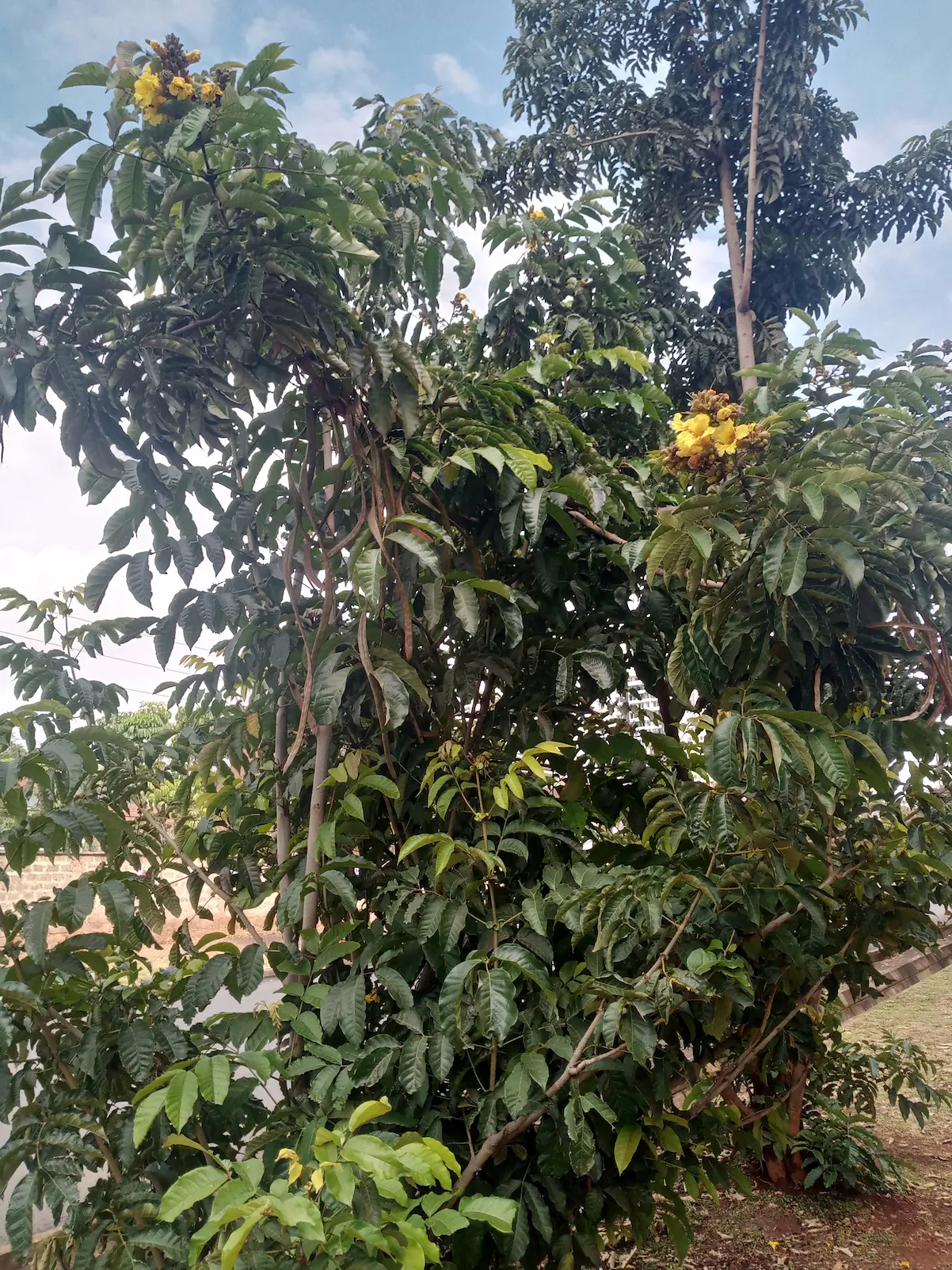
Markhamia / Siala / Nile Tulip Tree
A beautiful indigenous flowering tree that deserves far greater use in Kenyan landscaping than it currently receives. Large, trumpet-shaped, golden-yellow flowers with distinctive purple-red veining are borne in clusters at the branch tips — creating a warm, cheerful display that lasts several weeks and draws sunbirds and bees. The large, pinnate leaves give the tree a lush, tropical appearance. Long, narrow seed pods that follow are also ornamental. Deeply connected to western Kenya landscapes and the communities around Lake Victoria.
An excellent medium shade and specimen tree for gardens, parks, schools, and roadside planting across Kenya’s mid-altitude and highland zones. Its tidy growth habit and manageable size make it suitable for a wider range of sites than many flowering trees. An ideal choice for landscape designers who want to venture beyond the most familiar list — while staying firmly within proven, Kenya-appropriate species. Consider this one a discovery worth making.
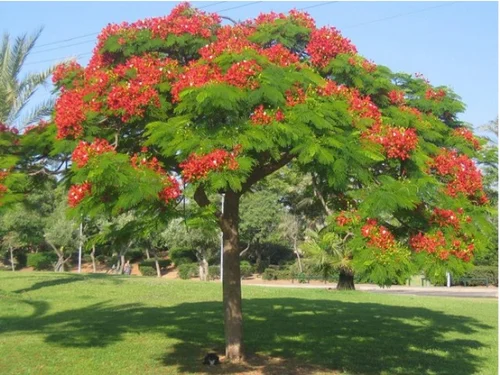
Flamboyant / Royal Poinciana
Perhaps the most dramatically flowering tree used in Kenya’s coastal and warm lowland landscapes. The wide, perfectly flat-spreading umbrella canopy erupts in masses of large, brilliant orange-red flowers during the dry seasons — creating a blazing, unforgettable overhead canopy that stops people in their tracks. Fine, bi-pinnate foliage provides delicate, filtered light when in leaf. Large, dark-brown seed pods persist on the tree for months after flowering, adding a further ornamental dimension. There is simply nothing quite like a Flamboyant in full flower.
Best suited to wide, open spaces: parks, hotel grounds, large estates, and wide boulevard or avenue planting. The canopy requires ample room — 12 m or more in diameter at maturity. Spectacular planted in pairs flanking a grand entrance. Very widely planted in Mombasa, Malindi, Kilifi, Diani, and Kisumu, where the warm climate allows it to flower at its very best.
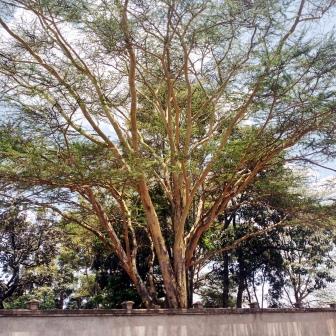
Fever Tree / Yellow Fever Acacia
Instantly recognisable — and utterly unforgettable — by its extraordinary powdery lime-green to yellowish bark, one of the most remarkable barks of any tree in East Africa. The smooth, luminous trunk glows in morning and evening light in a way that seems almost unreal. Fine, feathery foliage casts light, dappled shade. Fragrant golden-yellow pompom flowers appear in spring and attract bees, sunbirds, and weavers. A real wildlife tree and a true showstopper as a specimen.
A superb structural specimen tree for savannah-style gardens, lodges, wildlife estates, and naturalistic landscape designs. The luminous lime-green bark makes it a compelling year-round focal point regardless of season — one of the very few trees whose bark alone justifies planting it. Excellent near water features or planted in loose groups for a woodland effect. Very popular in Laikipia, the Rift Valley, Samburu, and Naivasha landscape settings.
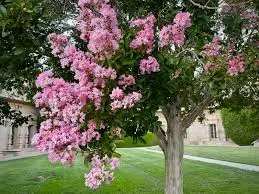
Crape Myrtle / Pride of India
One of the most ornamentally complete small trees available in Kenya — it delivers interest in every season. Spectacular clusters of crinkled pink to lavender flowers appear for several weeks in the dry season. The bark is perhaps its greatest feature: it exfoliates beautifully in patches to reveal a mottled mosaic of grey, brown, cinnamon, and cream — elegant, tactile, and arresting even when the tree is not in flower. Leaves turn orange-red before dropping, providing a rare tropical “autumn colour” display that surprises and delights.
Popular specimen tree for smaller gardens, courtyards, hotel entrance courts, and poolside planting. Can be kept as a large multi-stemmed shrub or trained into a refined single-trunk standard tree. Excellent in avenue or allée planting along medium-width paths and roads. Performs best in warm conditions — very popular in Mombasa, the coastal strip, and Nairobi’s warmer suburbs such as Lavington and Westlands.
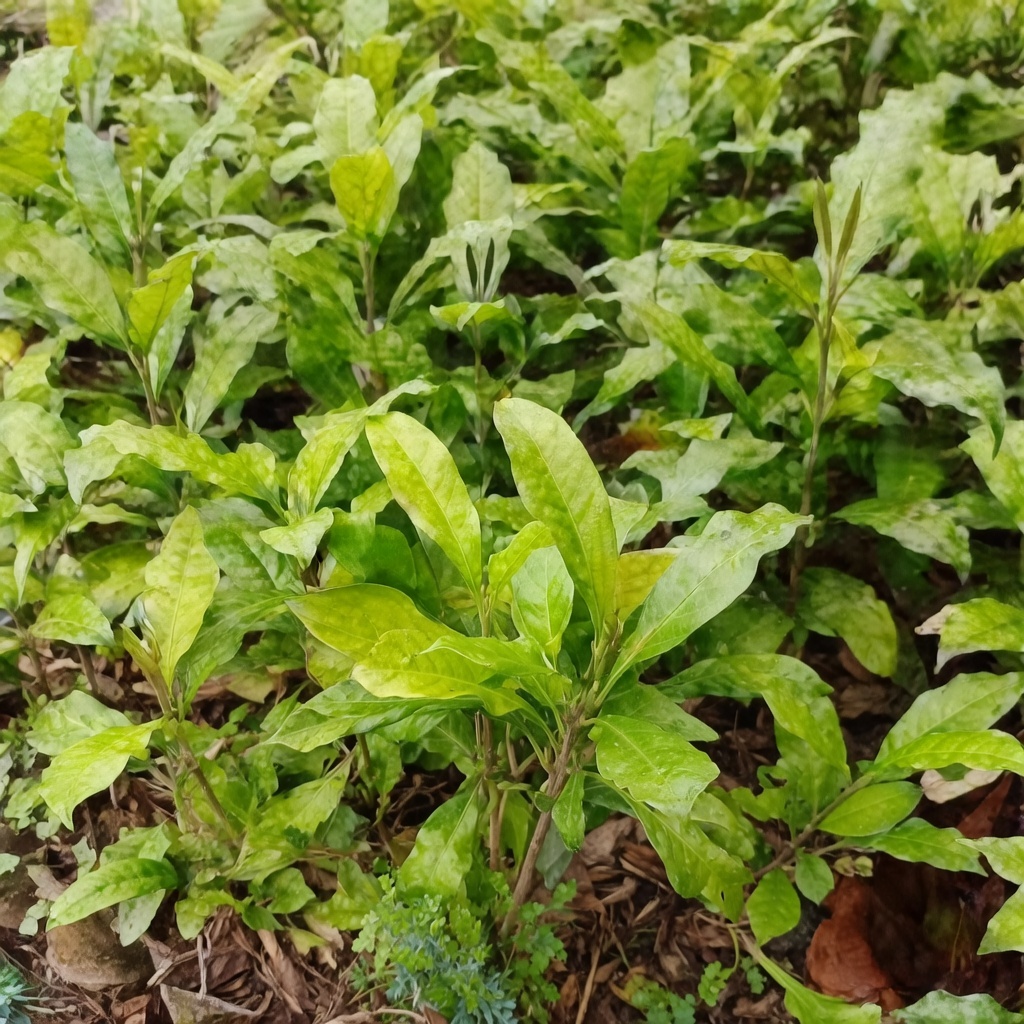
Elgon Olive / East African Olive
A magnificent, long-lived indigenous highland forest tree — the larger, more powerful sibling of the African Wild Olive. It develops a broad, dense, rounded crown and an attractively furrowed dark bark that becomes deeply ridged and characterful with age. Narrow, dark-green leaves have a subtle sheen. An incredibly valuable wildlife tree, supporting numerous bird species that feed on its small, olive-like fruits throughout the year. Specimens of great age develop an imposing presence that very few trees can match.
Ideal for large-estate, farm, or heritage landscape planting where long-term character and permanence are valued above fast results. Used extensively in indigenous highland forest restoration plantings across the Aberdares, Mt. Kenya, and Elgon zones. An excellent permanent shade tree that genuinely improves with every passing decade. A tree you plant for the next generation as much as for yourself.
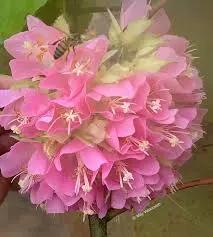
Dombeya / Wild Pear / Pink Ball Tree
A beloved indigenous small tree that produces large, rounded, pompom-like heads of delicate pink flowers hanging in generous clusters from the branches in the late dry season — appearing when almost nothing else in the landscape is flowering, which makes its display all the more precious. The flowers are sweetly fragrant and attract masses of bees and butterflies, making it one of the most wildlife-friendly small trees available. Large, heart-shaped, velvety leaves are handsome and lush year-round. It is commonly seen flowering along Kenya’s highland roadsides in magnificent seasonal abundance.
Ideal as a small specimen tree for medium and compact gardens, along driveways, or at a garden entrance where its flowering display can be appreciated at close range. Highly effective in indigenous planting compositions and butterfly or pollinator gardens. Combines beautifully with aloes, indigenous grasses, and other highland native plants. An excellent choice for creating a wildlife-friendly, authentically Kenyan garden. For any landscape practitioner building a strong indigenous planting palette, Dombeya is an essential inclusion.
Plant the Right Tree, in the Right Place
The trees used in landscaping in Kenya span a remarkable range — indigenous species playing on home ground alongside exotics that have long since earned their place. From the fast-growing pioneers that get a new garden established quickly to the stately heritage trees that define an estate for generations, this list is where most Kenyan landscape projects begin — and for good reason.
Whether you are designing a new garden in Nairobi’s highlands, a coastal lodge in Kilifi, a commercial development in Westlands, or a farm homestead in Laikipia — the best outcome always comes from matching the tree to the available space, the local climate zone, and the long-term vision for the property. A tree is a commitment. Choose deliberately, plant well, and give it what it needs to establish — and it will repay you many times over.
Are you brave enough to step off this list? There is a whole world of excellent trees waiting to be discovered in Kenya’s landscapes — but this is a very fine place to start.